
Distinguished Keynote Speakers
The ICHI 2026 Organizing Committee is proud to present a lineup of distinguished keynote speakers who are leaders in health informatics, AI, and healthcare innovation.

Conference Keynote
Anita Burgun, MD, PhD, FIAHSI
Professor of Medical Informatics, Université Paris Cité
Director of Department of Medical Informatics
Georges Pompidou European Hospital and Necker Children’s Hospital
Director of Department of Medical Informatics
Georges Pompidou European Hospital and Necker Children’s Hospital
Talk Title: From Data to Decisions: Building Learning Health Systems in a Rare Disease Oriented Hospital
Abstract:
Hundreds of millions of people around the world live with rare diseases; more than 7000 types of rare diseases have been identified but most of these conditions still do not have treatments. To trigger the establishment of a more effective health system for rare diseases, learning health systems integrating multimodal clinical information and genomic data, and providing adequate models to test hypotheses in rare complex situations have to be designed. Challenges associated with very low disease prevalence, complex disease mechanisms and pleiotropy have to be addressed. This talk will highlight the roles of routine care data, "maximum" patient-centric data sets, foundation models, and federated infrastructures. It will provide examples of digital technologies that can help accelerate research, and foster equitable access to timely, accurate diagnosis, and adequate disease management.
Bio:
Prof. Anita Burgun is a full professor of biomedical informatics and statistics at Université Paris Cité. She leads the Departments of Medical Informatics at Georges Pompidou European Hospital and Necker Children's Hospital. She holds a Chair at the Institut 3IA Prairie and is a senior researcher in the Clinical Bioinformatics team at the Imagine Institute of Genetic Diseases. Her research focuses on clinical and translational biomedical informatics, large-scale health data integration, and data-driven approaches for precision medicine. Prof. Burgun is an internationally recognized expert in biomedical informatics, serving as a reviewer for the European Research Council and as an expert evaluator for the Canada Foundation for Innovation. She has represented France at the International Medical Informatics Association since 2011 and has been a Fellow of the International Academy of Health Sciences Informatics since 2023.

Conference Keynote
Hoifung Poon, PhD
General Manager, Microsoft Research, USA
Talk Title: Towards Virtual Patient: AI for Accelerating Medical Discovery
Abstract:
Today, medical discovery advances one clinical trial at a time, each taking years to execute and often costing $100 million or more. As we enter the era of precision health in which we recognize that “one size doesn't fit all” and thus try to tailor treatments for each individual, continuing on today's discovery processes is clearly not sustainable. The confluence of technological advances and social policies has led to rapid digitization of multimodal, longitudinal patient journeys, such as electronic health records (EHRs), imaging, and multiomics. Our overarching research agenda lies in advancing multimodal generative AI to learn the language of patients and create a virtual patient world model as digital twin for forecasting disease progression and treatment response. This enables us to synthesize population-scale real-world evidence from hundreds of millions of patients and accelerate medical discovery through AI-powered virtual clinical trials, in deep partnerships with real-world stakeholders such as large health systems and life sciences companies.
Bio:
Hoifung Poon is the General Manager of Real-World Evidence at Microsoft Research and an affiliated faculty at the University of Washington Medical School. He leads biomedical AI research and incubation, with the overarching goal of structuring medical data to optimize delivery and accelerate discovery for precision health. His team and collaborators are among the first to explore large language models (LLMs) and multimodal generative AI in health applications, producing popular open-source foundation models such as PubMedBERT, BioGPT, BiomedCLIP, LLaVA-Med, BiomedParse, with tens of millions of downloads. His latest publications in Nature and Cell features groundbreaking digital pathology and spatial proteomics foundation models such as GigaPath and GigaTIME. He has led successful research partnerships with large health providers and life science companies, creating AI systems in daily use for applications such as molecular tumor board and clinical trial matching. His prior work has been recognized with Best Paper Awards from premier AI venues such as NAACL, EMNLP, and UAI, and he was named the "Technology Champion" by the Puget Sound Business Journal in the 2024 Health Care Leadership Awards. He received his PhD in Computer Science and Engineering from the University of Washington, specializing in machine learning and NLP.
Conference Keynote
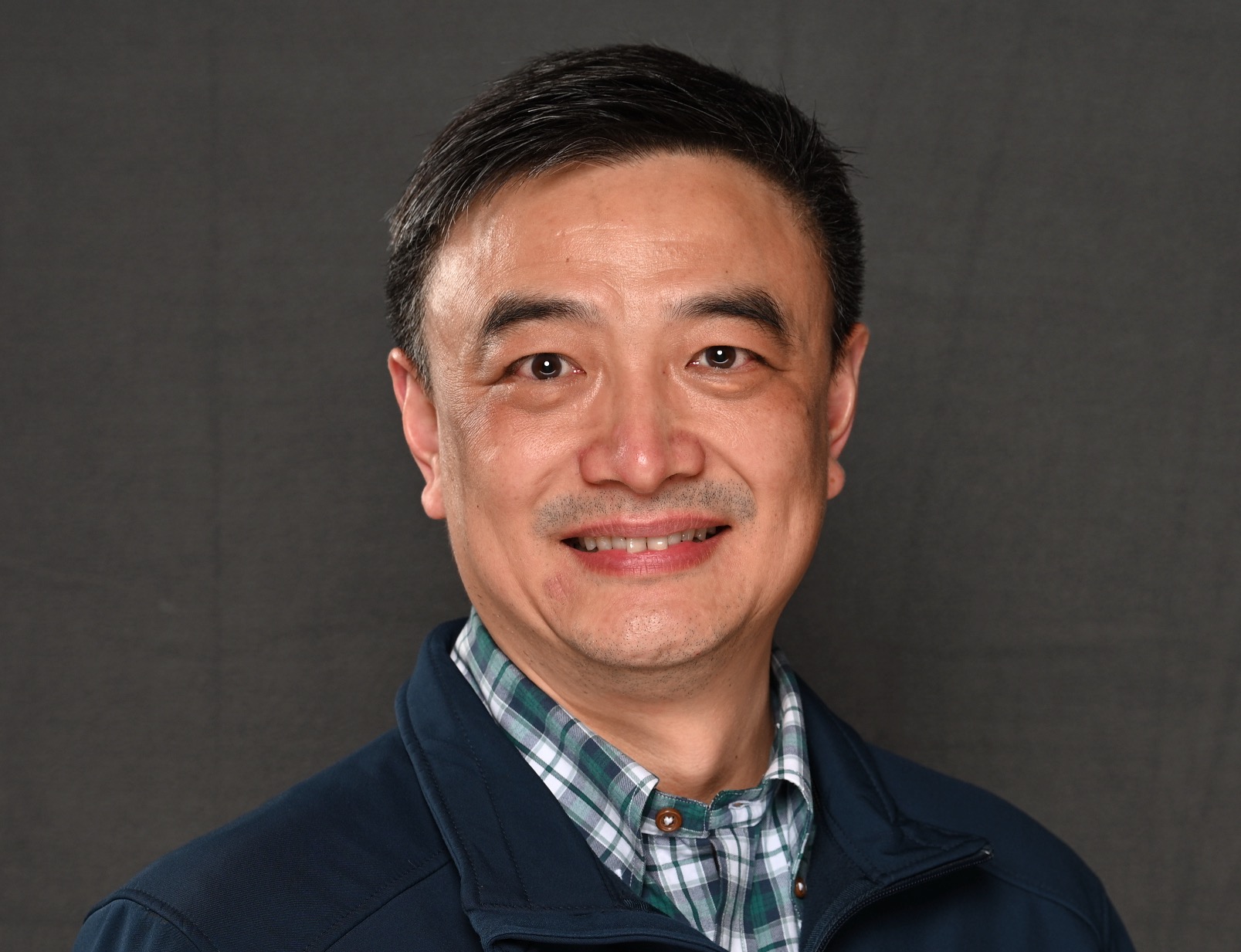
Li Shen, Ph.D., FAIMBE, FACMI, FAMIA
Professor of Informatics, Radiology and CIS, University of Pennsylvania, USA
Interim Director of the Informatics Division, Associate Director of Institute for Biomedical Informatics
Co-Director of Center for AI and Data Science for Integrated Diagnostics
Interim Director of the Informatics Division, Associate Director of Institute for Biomedical Informatics
Co-Director of Center for AI and Data Science for Integrated Diagnostics
Talk Title: Harnessing AI and Informatics to Advance Dementia Research and Aging Care
Abstract:
Alzheimer’s disease and related dementias (ADRD) remain a critical public
health challenge, demanding new strategies to elucidate disease mechanisms, identify
biomarkers, and improve support for patients and caregivers. Advances in AI and informatics
now enable the integration of large-scale genetics, multi-omics, brain imaging, and clinical
data, providing unprecedented opportunities to uncover genetic factors, mechanistic pathways,
and multimodal endophenotypes underlying ADRD. This talk will highlight recent progress in
brain imaging omics and the development of AI methods that support reliable diagnosis,
individualized risk stratification, and data-driven disease staging. We will also explore the
growing role of trustworthy multimodal and generative AI, including interpretable and
responsible models and large language models augmented with domain knowledge, in
accelerating discovery. Finally, emerging work that analyzes conversational data and social
media offers new opportunities to understand caregiver needs and to build intelligent, scalable
support tools. Together, these advances illustrate how AI-driven informatics can deepen
understanding of ADRD while strengthening care for aging adults and their caregivers.
Bio:
Dr. Li Shen is a Professor of Informatics, Radiology, and Computer and Information
Science at the University of Pennsylvania. He serves as Interim Director of the Informatics
Division in the Department of Biostatistics, Epidemiology and Informatics, Associate Director
for Bioinformatics at the Penn Institute for Biomedical Informatics, and Co-Director of the Penn
Center for AI and Data Science for Integrated Diagnostics. Dr. Shen is a pioneer in brain-wide
genome-wide association studies for Alzheimer’s disease. His research spans artificial
intelligence and machine learning, biomedical and health informatics, NLP and large language
models, medical image computing, network science, and multi-omics and systems biology,
with broad applications to complex diseases. His work focuses on developing and applying
trustworthy AI and informatics methods to analyze large-scale biobank and healthcare
datasets, with the goal of improving disease understanding, early detection, prevention, and
care. Dr. Shen has served on numerous journal editorial boards, grant review panels, and
conference organizing committees. He is a Fellow of AIMBE, ACMI, and AMIA, an ACM
Distinguished Member, and a Distinguished Contributor of the IEEE Computer Society.

Fireside Chat (Industry Track)
Tarek Tomes
Vice President and Chief Information Officer, University of Minnesota
Talk Title: The University as Health AI Engine: Infrastructure, Governance, and Minnesota’s Moment
Moderator:
Ikram Khan
Bio:
Tarek Tomes is Vice President and Chief Information Officer at the University of Minnesota. As chief information officer, he leads the University's technology strategy across digital platforms, data, artificial intelligence, and cybersecurity, aligning technology investments with academic priorities, research innovation, and operational excellence.
His leadership focuses on building a human-centered, service-oriented, secure, and resilient technology environment that empowers faculty, students, researchers, and administrative teams across the University community.
Tomes has more than 25 years of experience across the public and private sectors. Before joining the University, he served for seven years as commissioner of Minnesota IT Services (MNIT) and chief information officer for the State of Minnesota, where he led statewide efforts to build an innovative digital government that works for Minnesotans.
As the state's top technology leader, Tomes collaborated with state agencies, local governments, and private sector partners to expand the use of technology to improve public services. His work included modernizing major statewide systems supporting driver and vehicle services, paid family and medical leave, child welfare, and payment integrity programs, as well as enabling a rapid transition to remote work for more than 45,000 executive branch employees during the COVID-19 pandemic.
Tomes has been recognized as a national leader in data-driven government and the responsible use of artificial intelligence. Earlier in his career, he served as chief innovation officer and chief information officer for the City of Saint Paul, held assistant commissioner roles at Minnesota IT Services, and spent 13 years in the private sector with Control Data Systems and British Telecom.
His leadership focuses on building a human-centered, service-oriented, secure, and resilient technology environment that empowers faculty, students, researchers, and administrative teams across the University community.
Tomes has more than 25 years of experience across the public and private sectors. Before joining the University, he served for seven years as commissioner of Minnesota IT Services (MNIT) and chief information officer for the State of Minnesota, where he led statewide efforts to build an innovative digital government that works for Minnesotans.
As the state's top technology leader, Tomes collaborated with state agencies, local governments, and private sector partners to expand the use of technology to improve public services. His work included modernizing major statewide systems supporting driver and vehicle services, paid family and medical leave, child welfare, and payment integrity programs, as well as enabling a rapid transition to remote work for more than 45,000 executive branch employees during the COVID-19 pandemic.
Tomes has been recognized as a national leader in data-driven government and the responsible use of artificial intelligence. Earlier in his career, he served as chief innovation officer and chief information officer for the City of Saint Paul, held assistant commissioner roles at Minnesota IT Services, and spent 13 years in the private sector with Control Data Systems and British Telecom.

Fireside Chat (Industry Track)
Jesse Isaacman-Beck, PhD
Director of AI Policy and Strategy, U.S. Department of Health and Human Services (HHS) / ONC
Talk Title: Shaping the Future of Health AI: Inside the Federal Strategy on Data, Interoperability, and Intelligent Care
Moderator:
Ikram Khan
Abstract:
As artificial intelligence reshapes the delivery, administration, and governance of healthcare, the federal response has never been more consequential — or more complex. In this fireside chat, Jesse Isaacman-Beck, Director of AI Policy and Strategy at the U.S. Department of Health and Human Services (HHS) and senior leader within the Office of the National Coordinator for Health Information Technology (ONC), offers an inside look at how the federal government is navigating this pivotal moment.
Drawing on his work developing the HHS AI Strategy, leading ONC's efforts on data interoperability, and engaging the broader health informatics community through HHS's recent Request for Information, Isaacman-Beck will share the department's vision for a health system where data flows freely, technology evolves responsibly, and AI genuinely expands access and affordability of care. He will offer candid early insights from community feedback on how stakeholders — from health systems to researchers to patients — want to see federal AI priorities implemented in practice.
The conversation will explore what it means to govern AI in a rapidly shifting policy landscape, how ONC interoperability mandates intersect with the emerging demands of AI-enabled workflows, and where the federal government sees the greatest opportunities — and the most pressing risks — in the years ahead. The session will close with an open audience Q&A, offering ICHI participants a rare opportunity to engage directly with federal leadership on the policies shaping their research, their institutions, and their patients.
Drawing on his work developing the HHS AI Strategy, leading ONC's efforts on data interoperability, and engaging the broader health informatics community through HHS's recent Request for Information, Isaacman-Beck will share the department's vision for a health system where data flows freely, technology evolves responsibly, and AI genuinely expands access and affordability of care. He will offer candid early insights from community feedback on how stakeholders — from health systems to researchers to patients — want to see federal AI priorities implemented in practice.
The conversation will explore what it means to govern AI in a rapidly shifting policy landscape, how ONC interoperability mandates intersect with the emerging demands of AI-enabled workflows, and where the federal government sees the greatest opportunities — and the most pressing risks — in the years ahead. The session will close with an open audience Q&A, offering ICHI participants a rare opportunity to engage directly with federal leadership on the policies shaping their research, their institutions, and their patients.
Bio:
Jesse Isaacman-Beck, PhD, is the Director of the Division of Artificial Intelligence Policy and Strategy at the U.S. Department of Health and Human Services (HHS). In this role, he works to maximize Departmental effectiveness through emerging technology and to catalyze innovation to advance the health and well-being of all Americans.
Working closely with HHS's Chief Information, AI, and Data Officers, he has played a central role in establishing HHS's AI governance framework, developing AI strategy across administrations, and executing federal AI and data policy directives. His work has included launching the HHS AI Governance Board, shaping HHS AI use case oversight, modernizing HHS's IT, AI, and data policy, and leading the creation of HHS's first public Data Inventory.
Previously, Dr. Isaacman-Beck served in the NIH Office of Science Policy and as an AAAS Science & Technology Policy Fellow. He holds a PhD and trained as a neuroscientist at the University of Pennsylvania and Stanford University.
Working closely with HHS's Chief Information, AI, and Data Officers, he has played a central role in establishing HHS's AI governance framework, developing AI strategy across administrations, and executing federal AI and data policy directives. His work has included launching the HHS AI Governance Board, shaping HHS AI use case oversight, modernizing HHS's IT, AI, and data policy, and leading the creation of HHS's first public Data Inventory.
Previously, Dr. Isaacman-Beck served in the NIH Office of Science Policy and as an AAAS Science & Technology Policy Fellow. He holds a PhD and trained as a neuroscientist at the University of Pennsylvania and Stanford University.

Policy Keynote (Industry Track)
Ram D. Sriram, PhD
Senior Scientific Advisor, Information Technology Laboratory, National Institute of Standards and Technology (NIST), USA
Talk Title: Evaluating Large Language Models for Clinical Decision Support
Abstract:
Large language models (LLMs) are increasingly being used to support clinicians by analyzing unstructured text, medical literature, and clinical guidance. This keynote examines the growing need for rigorous AI metrology in healthcare, focusing on standardized methods to assess the accuracy, reliability, and trustworthiness of LLMs. The talk reviews emerging evaluation metrics for healthcare chatbots from an end-user perspective, including language understanding, performance on real-world clinical tasks, conversational effectiveness, and the specific measurement needs introduced by agentic AI architectures.
Bio:
Ram D. Sriram is currently a Senior Science Advisor in the Information Technology Laboratory at the National Institute of Standards and Technology. Before joining NIST, he served on the engineering faculty at the Massachusetts Institute of Technology, where he helped establish the Intelligent Engineering Systems Laboratory. He has authored or co-authored more than 300 publications, including several books, and was a founding co-editor of the International Journal for AI in Engineering. Sriram has received multiple lifetime achievement and pioneer awards, a distinguished alumnus award from IIT Madras, and fellowship status from major engineering, computing, medical, and scientific societies including ACM, IEEE, AIMBE, and AAAS.

Closing Keynote (Industry Track)
Ben Teplitzky, PhD
AI/ML Research Fellow, Patient Management, Boston Scientific, USA
Talk Title: From Algorithm to Adoption: Evolving BeatLogic into Trusted Real-World AI for Cardiac Monitoring
Abstract:
Artificial intelligence in healthcare is often presented through model performance, but real-world impact depends on much more than accuracy alone. This keynote traces the evolution of BeatLogic from an early deep-learning platform for comprehensive ECG annotation into a broader case study in healthcare AI enablement. The talk highlights the harder informatics problems behind adoption, including dataset design, annotation quality, edge-case discovery, validation strategy, workflow integration, human oversight, and continuous model evolution in the field.
Bio:
Dr. Teplitzky is an AI Research Fellow within the Cardiac Rhythm Management division at Boston Scientific and a leader in the development of AI for physiological signal interpretation and clinical decision support. Over the past decade, his work has focused on biomedical signal processing, machine learning, and translating emerging AI methods into clinically relevant, real-world systems. He was among the early innovators applying deep learning to ambulatory ECG interpretation and led development of BeatLogic, an AI platform for automated ECG analysis. His experience spans startups, growth-stage companies, and global medical technology organizations, giving him a distinctive perspective on how AI is conceived, validated, and deployed in regulated healthcare environments. Across industry and academia, his work has included algorithm development, computational modeling, data and validation strategy, and AI-enabled product innovation. He is an inventor on multiple patents and an author of peer-reviewed publications in biomedical engineering and medical AI. Dr. Teplitzky earned his BS in Biomedical Engineering from Arizona State University and his PhD in Biomedical Engineering from the University of Minnesota, where he was an NSF Graduate Research Fellow.